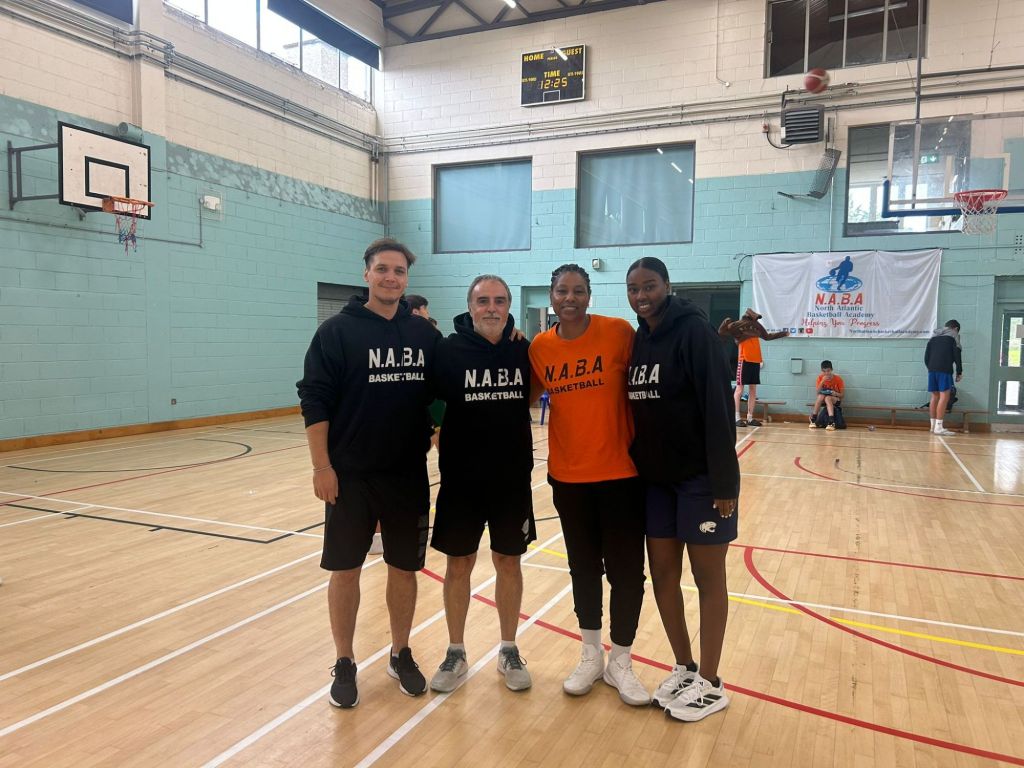
Series: Coaching the Mind – Part 2
Location: Dublin, Ireland
Academy: North Atlantic Basketball Academy (NABA)
Duration: 2 Weeks | July 2025
Role: Sport Psychologist
Reflecting Beyond the Court
After two weeks working with youth athletes at NABA, I left with practical takeaways I can apply immediately in future camps and team settings. Some came from moments where things didn’t go as planned and others from seeing what worked so well it’s worth repeating.
This post covers the key lessons I took from the experience not only in my role as a sport psychologist, but also in how I communicate and work within a team.
1. More people doesn’t mean more engagement
Just because the gym was full didn’t mean the kids were tuned in. I realized early that engagement is something you actively generate. It’s about energy, tone, delivery, and making each player feel like they matter even in a group setting.
2. A curious player is an improving player
The most progress I saw came from players who asked questions. They weren’t always the most skilled or confident but they wanted to understand and that curiosity became their competitive edge.
3. Communication needs more than good intentions
I had to get better at choosing my words carefully, repeating concepts in different ways, and checking for real understanding not just polite nods.
Some players will always pretend they understand. Others will ask when they don’t. I had to reach both.
4. Balancing team vs. individual focus
When you’re working with 90+ kids, it’s tempting to lock in on the loudest or most vocal players but I had to learn how to make everyone feel seen without showing favoritism. That’s a skill I’m still developing.
5. Diversity requires flexibility
I worked with players across ages, cultures, positions, and personalities. There’s no one-size-fits-all way to teach mindset. I had to constantly adapt, shift examples, change tones and remain open to learning from them too.
6. Transparency makes teams stronger
In any support role, clarity is everything. Being open about what I was doing and why, helped the other staff trust me and helped the players understand the “why” behind the mental training. Transparency created flow.
7. Not all feedback is constructive, but all of it is useful
Some feedback was vague or unfiltered but I learned how to pick out what mattered, even from messy or emotional reactions. That helped me refine not just the content I delivered but how I delivered it.
8. Shared values make change smoother
When coaches are aligned on values, mindset, and goals, adjustments are easier. At NABA, that alignment made introducing mental skills smoother and more effective.
9. Great teams make you better
Working alongside professionals who value collaboration, communication, and accountability elevated my delivery and confidence. Being part of a team that prioritizes player wellbeing is a game-changer.
Closing thoughts
These lessons weren’t just about coaching they were about human connection.
Each player, challenge, and conversation helped me grow in how I show up, speak, listen, and lead.
In the next and final part of this series, I’ll share the small, powerful moments I witnessed from the kids themselves stories that reminded me why I do this work in the first place.
Read part 3: What the kids taught me at NABA
Want to create a sport environment that includes mindset coaching?
I offer tailored workshops and mental skills sessions for youth academies, performance teams, and sports organizations. Let’s build a system that develops not just players but people.
Reach out here or email me at thesisumindset@gmail.com

 The Sisu Mind
Leave a reply to Coaching the mind: My two weeks as a sports psychologist at NABA – The Sisu Mind Cancel reply